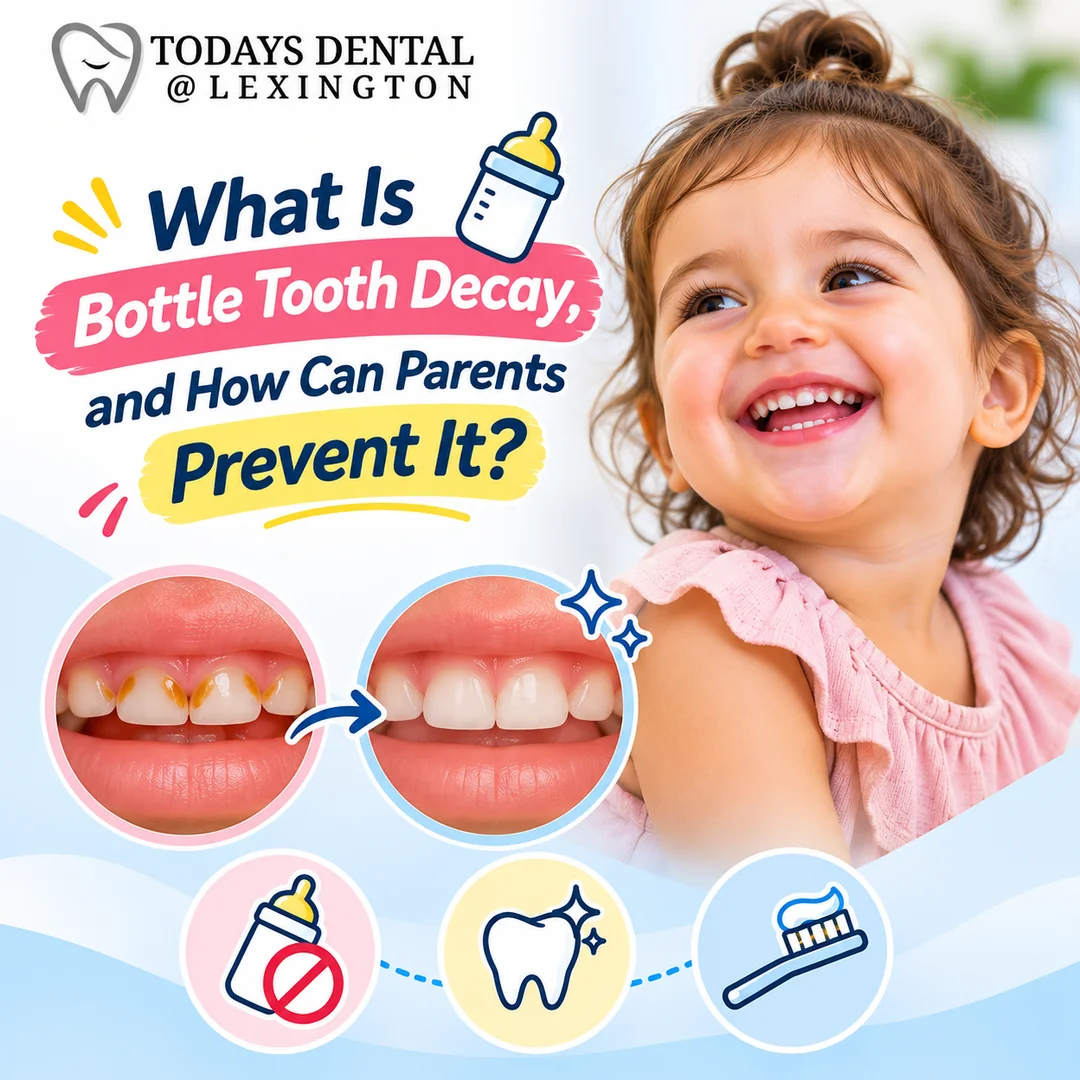
Many parents spot dark spots or soft teeth on a baby and feel alarmed. They worry that a nightly bottle might cause quick damage.
Bottle tooth decay happens when baby teeth sit in milk, formula, or juice too long. It often starts on the upper front teeth. The decay can begin in about 20 minutes after sugar hits the mouth.
What Is Bottle Tooth Decay?
Bottle tooth decay happens when sugary liquids linger on a baby’s teeth. This can lead to cavities that hurt your child's dental health.
Common causes of bottle tooth decay
Parents should know what causes early childhood caries. Exposed teeth develop decay fast.
- Frequent exposure to milk, formula, or juice leads to decay. Bad bacteria feast on sugars in these drinks and make acid. The decay process can start in about 20 minutes after sugar hits the mouth.
- Prolonged bottle use, especially at night, raises risk. A pediatric dentist recalled treating a 9-month-old with severe upper front decay after nightly bottles. Upper front teeth suffer most because the tongue shields the lower front teeth during feeding.
- Fruit juice and sweetened drinks add fuel for cavities. Even 100 percent juice contains sugars that feed cavity bacteria. Parents who offer juice often increase a child’s sugar exposure.
- Sharing spoons, cups, or cleaning a pacifier with the caregiver’s mouth spreads bad bacteria. Transmission from caregiver to child can seed cavity-causing bacteria early. This practice raises the odds of early childhood caries.
- Frequent snacking on sugary foods keeps fermentable substances in the mouth. Long periods with sugars present let bacteria produce more acid. That acid wears enamel away and creates cavities.
- Late introduction of a sippy cup can keep bottle habits in place. Experts recommend moving to a cup by about age one. Staying with bottles prolongs harmful feeding practices.
- Poor gum and tooth cleaning allows plaque to build up. Parents who skip cleaning invite decay on new teeth. Simple wiping and brushing cut down harmful bacteria.
- Lack of fluoride and delayed dental visits raise risk further. Pediatric dentistry recommends early checkups, usually by the first birthday. Fluoride helps strengthen enamel and fight cavities.
Signs and symptoms to look out for
Bottle tooth decay often shows first on the upper front teeth. It is also called early childhood caries.
- White spots on the enamel that do not wipe away, an early sign of enamel demineralization from frequent milk, formula, or juice exposure.
- Brown or black pits or holes on the upper front teeth, which signal actual cavities from fermentable sugars and bad bacteria.
- Teeth that look chalky or dull, a change caused by repeated acid attacks that begin about 20 minutes after sugar exposure.
- Pain or fussiness during eating, as cavities progress and reach dentin or the nerve.
- Trouble biting or chewing, which may happen after multiple teeth have decay and the child avoids using the sore area.
- Swollen or red gums near affected teeth, a sign that bacteria have irritated the soft tissue around decayed areas.
- Foul breath that persists, caused by bacterial activity on sugars left in the mouth from bottle or juice exposure.
- Visible plaque buildup, which harbors bad bacteria and raises the risk of early childhood caries.
- Rapid spread of damage from one tooth to several, because prolonged exposure to sugary liquids lets decay move quickly.
- Frequent bottle use at nap or bedtime, or steady sipping from a cup, which often accompanies the above signs and speeds cavity formation.
- Caregiver illness or frequent sharing of spoons and cups, which can pass cavity-causing bacteria to the infant and show as early decay.
- Lower front teeth that stay healthier, while upper front teeth suffer first, due to the tongue protecting the lower teeth during feeding.
How Can Parents Prevent Bottle Tooth Decay?
Parents can take simple steps to shield their child from bottle tooth decay. Clean gums and teeth daily, and switch to a sippy cup by age one for better oral health.
Avoid putting a child to bed with a bottle
Putting a child to bed with a bottle soaks the teeth in milk or juice for long periods. This practice leads to bottle tooth decay, also called early childhood caries. Bad bacteria feed on the sugars and make acid, and decay can start in about 20 minutes.
It often attacks the upper front teeth because the tongue shields the lower ones. One mother shared that her toddler woke with sore teeth after nightly bottles.
Caregivers who share spoons or clean a pacifier with their mouth can pass cavity-causing bacteria to babies, which raises risk. Dentists advise stopping bedtime bottles and moving to a sippy cup by age one to protect dental health and lower cavities. Fluoride toothpaste in a smear helps, and early dental checkups catch problems fast.
Clean your baby’s gums and teeth regularly
Baby teeth need care just like adult teeth. Keeping a child's mouth clean helps prevent tooth decay.
- Start cleaning your baby's gums even before the first tooth appears. Wipe the gums with a soft, damp cloth after feedings to remove harmful bacteria that can lead to decay.
- Brush your baby’s teeth as soon as they erupt. Use a tiny smear of fluoride toothpaste on a soft-bristled brush, about the size of a grain of rice, to guard against cavities.
- Clean each tooth gently in small circles. Focus on the front and back surfaces, since these areas often hide plaque and food particles.
- Daily cleaning is crucial for healthy oral hygiene. Establishing this routine helps prevent early childhood caries, or bottle tooth decay.
- Make it fun! Sing songs or use playful language while brushing to make this time enjoyable and build good habits early on.
- Don’t forget about those baby molars! They can come in around age one and need special attention since they are more prone to cavities due to their grooves.
- Avoid using toothpaste until your child learns how to spit it out safely; aim for age 2 or 3 when they can understand this concept better.
- Encourage drinking water after meals or snacks to wash away sugars lingering on teeth; staying hydrated also promotes overall oral health.
- If your child resists cleaning their mouth, remain patient and consistent with your approach; eventually, they'll get used to it and may even look forward to it!
- Schedule regular dental checkups starting from the age of one so professionals can monitor growth and provide guidance suited for your child's needs.
Transition to a sippy cup by age one
Transitioning to a sippy cup by age one can help protect little teeth. Parents should begin this shift after their first birthday. Sippy cups reduce the risk of bottle tooth decay since they often contain less sugary liquid. Using a sippy cup also encourages independent drinking skills, which is fun for toddlers.
Frequent exposure to sugary drinks puts teeth at risk. Limiting these drinks while using a sippy cup makes sense; it helps keep cavities at bay. A close friend shared that her child loved transitioning because of the colorful designs on the cups, making every sip exciting! So, ditching that bedtime bottle in favor of a sippy cup can be beneficial for both parents and kids alike.
Limit sugary drinks and snacks
Sugary drinks and snacks can harm dental health. They create a perfect environment for bad bacteria in the mouth. Milk, juice, and formula are often culprits of bottle tooth decay.
Frequent exposure to these sugary liquids leads to cavities, especially on the upper front teeth. Parents should not give their kids sugary treats between meals or at bedtime. Instead, offer water or healthy snacks like fruits and vegetables. This practice reduces sugar exposure and helps keep little smiles bright and healthy.
Schedule early dental checkups
Parents should schedule early dental checkups for their little ones. These visits help detect bottle tooth decay before it becomes a problem. Pediatric dentists recommend the first visit by age one.
During this appointment, they can assess the child's oral health and offer guidance on proper feeding practices.
Regular checkups allow parents to ask questions about oral hygiene and sugar exposure. Early intervention is crucial as bad bacteria can lead to cavities if left unchecked. Getting ahead of dental issues helps children maintain healthy smiles for years to come.
Frequently Asked Questions
What is bottle tooth decay?
Bottle tooth decay happens when sugary liquids, like juice or milk, stay in a baby's mouth too long. This can cause cavities on their baby teeth.
How can parents prevent bottle tooth decay?
Parents can prevent this by avoiding putting babies to bed with a bottle full of sugary drinks. Instead, offer water at bedtime and clean their gums regularly.
When should I start cleaning my child's teeth?
Start cleaning your child's gums even before they have teeth. Use a soft cloth to wipe their gums after feeding; once the first tooth appears, use a small toothbrush.
Are certain drinks worse for my child’s teeth?
Yes! Sugary drinks like soda and fruit juices are bad for little teeth. They feed harmful bacteria that cause cavities, so it's best to limit these types of beverages.