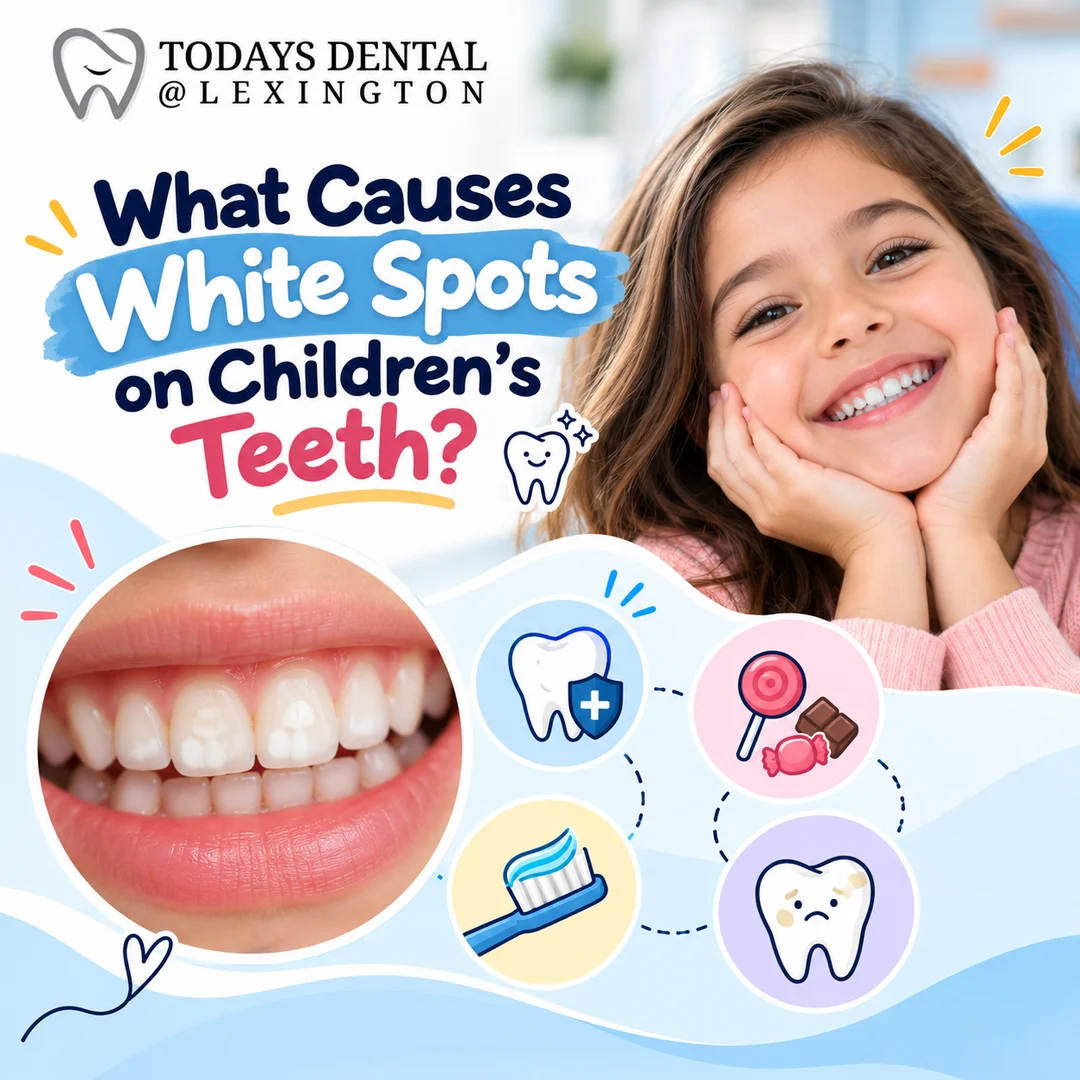
Parents often spot small white marks on a child’s teeth and feel alarmed. They worry the marks mean cavities, poor enamel, or a lifetime of dental problems. The sight can feel like a blemish on a bright smile, and that worry makes them act fast.
One fact matters most, white spots usually mean the enamel lost minerals or formed differently. They can come from too much fluoride, early decay, enamel defects, or plaque.
White spots on children's teeth can stem from various issues. Parents should pay attention to these potential culprits that may harm their child's smile.
Too much fluoride during baby tooth formation causes pale streaks or spots on enamel. Dentists call this fluorosis. The condition shows as thin white lines or cloudy patches. It results from mineral loss and altered enamel development, not from decay.
Parents often spot the marks after the first teeth appear. Pediatric dentistry teams check fluoride intake from water, toothpaste, and supplements. Some kids get mild changes that only affect looks. Others need remineralization treatment or cosmetic care to hide spots.
Enamel hypoplasia shows up as thin or pitted enamel and pale white spots. This enamel defect happens when enamel fails to form properly during tooth development. Doctors link it to high fever, low birth weight, and certain childhood illnesses.
The condition reflects mineral loss and decalcification, and it can also stem from calcium deficiency or genetics. Children with the issue often face faster tooth decay because the enamel offers less protection.
A pediatric dentist once treated a five-year-old with wide white patches and rapid cavities. The dentist recommended fluoride varnish and resin fillings to strengthen the area. Parents were asked to improve oral hygiene and cut back on acidic foods and sugary snacks. Regular visits in children’s dentistry help catch defects early and limit further mineral loss.
After enamel hypoplasia, small white spots can turn into soft pits of decay. Acid from sweets and juices eats away minerals, causing decalcification and tooth decay in hours or weeks.
Caregivers spot cloudy or chalky marks near the gum line. Plaque clings to those spots and speeds mineral loss. Pediatric dentistry treats early decay with fluoride varnish, fillings, or stronger home care.
Early tooth decay often leads to plaque buildup. This sticky film forms on teeth when bacteria feast on leftover food. If kids don’t brush well, plaque hardens into tartar. Both plaque and tartar can cause white spots on teeth. These spots show demineralization, a precursor to cavities.
Kids need regular dental visits to combat this issue. They should also brush twice a day with fluoride toothpaste and floss daily. Parents can help by monitoring their children's eating habits too. Limiting sugary and acidic foods protects enamel, keeping smiles bright and healthy!
To keep white spots off children’s teeth, parents should focus on good oral hygiene habits. Brushing twice a day really helps. Flossing daily can also make a difference. A balanced diet strengthens teeth and keeps them looking bright.
Limiting sugary snacks is smart too. Keeping an eye on fluoride use protects enamel from damage as well. By nurturing these habits, kids can enjoy healthy smiles for years to come!
Proper oral hygiene helps protect children's teeth from white spots. Keeping teeth clean is crucial for dental health.
Keeping up with these habits will help prevent white spots on children’s teeth and promote long-lasting dental health!
A balanced diet plays a vital role in children's dental health. Foods rich in calcium, like milk and cheese, help strengthen tooth enamel. Fruits and vegetables provide essential vitamins that support overall wellness.
For instance, crunchy apples can even help remove plaque as kids chew them. Conversely, sugary snacks contribute to tooth decay and increase the risk of white spots.
Parents should limit acidic foods that can lead to mineral loss in teeth. Snacks high in sugar create an environment where bacteria thrive, resulting in cavities. By guiding kids toward healthy eating habits and making meals fun, they support their children's bright smiles while reducing dental issues before they start. Next up is regulating fluoride intake for optimal health benefits without overdoing it.
Fluoride helps strengthen tooth enamel. However, too much fluoride can cause white spots.
Taking care of children's teeth means balancing good practices with sensible fluoride use. Keeping an eye on these factors trains children for healthier smiles down the road!
White spots on children's teeth are often a sign of enamel demineralization. This happens when minerals in the tooth's surface break down, leading to visible changes.
Several factors can cause white spots on teeth. Poor oral hygiene is one culprit; it allows plaque buildup, which harms enamel. Excessive fluoride exposure during early childhood can also lead to this issue.
Yes, diet plays a big role. Sugary snacks and drinks can contribute to tooth decay and increase the risk of developing those pesky white spots.
To prevent them, encourage good brushing habits and regular dental check-ups for your child. If they already have white spots, consult a dentist for advice on treatment options like remineralization therapies or cosmetic procedures.
Tell us a little about what you need — we'll be in touch shortly.
458 Old Cherokee Rd suite 100, Lexington, SC 29072, United States

Hi! I'm Tooth fairy! Your AI Assistant Ask me anything