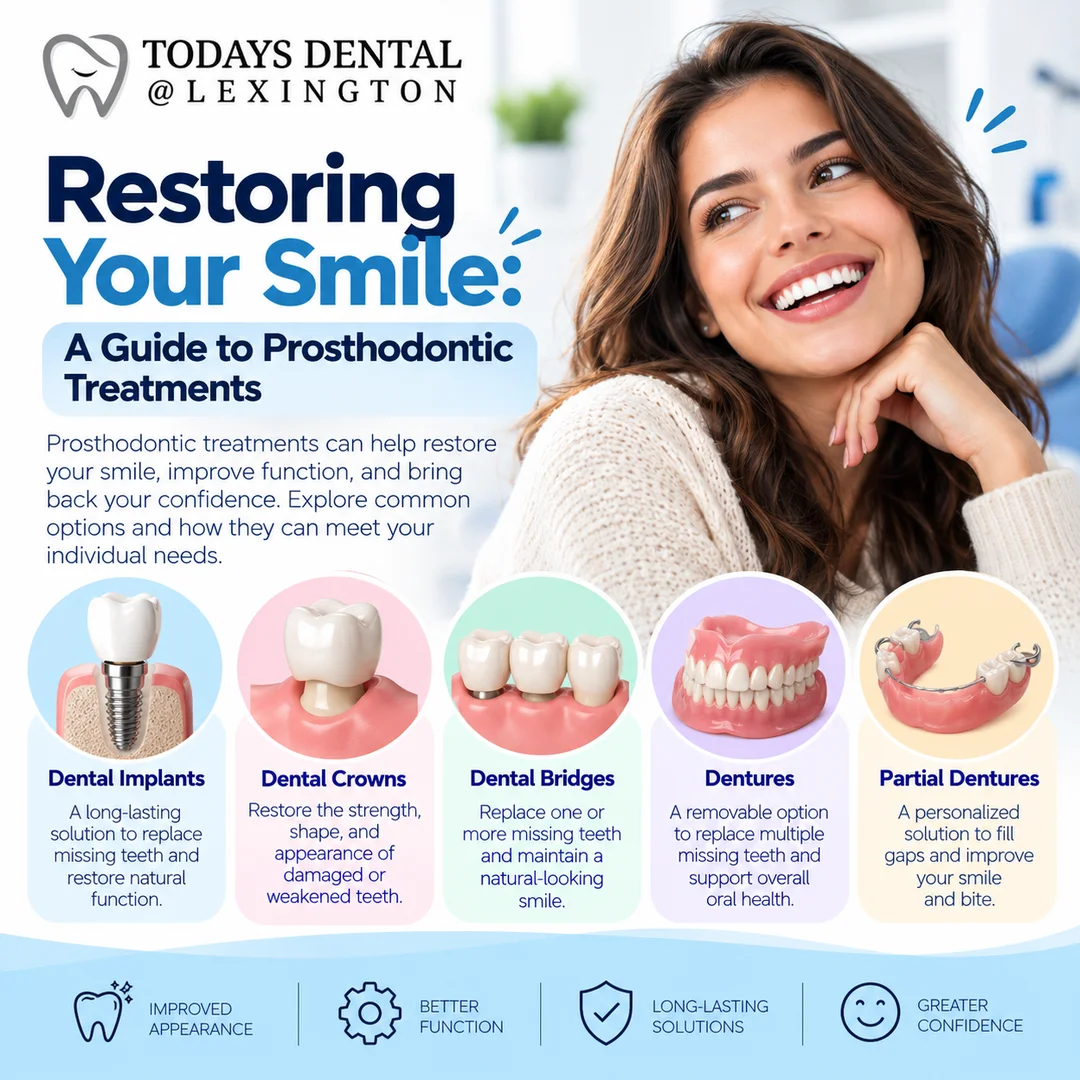
Many people hide their smile after losing or breaking a tooth. They may bite on one side, skip crunchy foods, or feel shy in photos. That worry can wear on daily life and mood. A smile repair can feel like a big step, but help exists.
A prosthodontist is a dental specialist who restores missing teeth and jaw structures. They fix function and looks, much like a repair shop for smiles. Here you will know about implants, crowns, bridges, dentures, and veneers.
Prosthodontic treatments offer various solutions to restore smiles. People can choose from options like dental implants, crowns, and dentures to improve their oral health.
Dental implants replace missing teeth with a strong, long-lasting solution. They anchor into the jawbone using a titanium post that acts like a tooth root. Prosthodontists are highly trained specialists in implantology, cosmetics, crowns, and other restorative procedures.
Restorative dentistry ranges from simple fillings and tooth bonding to complex implants and veneers. Implants boost the strength and stability of teeth and jaw structures, and they lower the risk of gum disease while improving oral health and smile aesthetics.
The procedure often involves placing the implant, then attaching an abutment and a crown. Many patients regain near-normal chewing and speech after treatment. Complete dentures provide full coverage and restore function for patients who have lost all their teeth in the upper or lower jaw.
Fixed bridges replace one or more missing teeth, making it easier to eat and speak while improving smile appearance. Prosthodontic care restores balance, comfort, and function so a smile works as well as it looks.
After discussing implants, crowns and bridges offer other strong ways to restore teeth. A prosthodontist in the clinic shared a first-hand case where she placed a three-unit fixed bridge to replace two missing molars; the patient ate steak again after weeks.
Prosthodontists are highly trained specialists in treating dental and facial problems. They specialize in cosmetics, implants, crowns, and other restorative procedures. Fixed bridges replace one or more missing teeth, making it easier to eat and speak and improving smile appearance.
A single crown can repair a broken tooth or cover a tooth after implant placement. Restorative dentistry improves aesthetics and rebuilds strength and stability of teeth and jaw structures.
Restoring missing or damaged teeth reduces the risk of gum disease and leads to better overall oral health. Prosthodontic care focuses on balance, comfort, and function so a smile works as well as it looks. Crowns and bridges sit at the core of smile rehabilitation and dental restoration.
Complete dentures provide full coverage and restore function for patients who have lost all their teeth in the upper or lower jaw. Prosthodontists, trained specialists in cosmetics, implants, crowns, and other restorative procedures, fit and adjust these prosthetics for comfort and bite balance.
They help lower the risk of gum disease and improve oral health by replacing missing tooth and jaw structures. Dentures also boost smile aesthetics and increase strength and stability in the mouth.
Good denture care, regular hygiene, and follow ups with a prosthodontist keep restorations working well and extend their lifespan. For patients who want thin, natural-looking tooth fronts, veneers offer a different cosmetic route.
Veneers transform smiles with their thin, custom-made shells that bond to the front of teeth. These cosmetic restorations offer a quick fix for issues like chips, gaps, or stains. Prosthodontists often recommend veneers because they improve aesthetics in a simple manner.
Patients can enjoy natural-looking results and enhanced confidence after treatment. People love how veneers enhance their smile while requiring minimal tooth alteration. This procedure helps hide imperfections effectively; folks leave the dental office feeling brand new.
With proper care, veneers can maintain an attractive appearance for many years. Next up are essential benefits of prosthodontic treatments that go beyond just looks.
A patient regained confidence after prosthodontic care restored chewing and speech.
| Benefit | Details and Examples |
|---|---|
| Improved Function | Fixed bridges replace one or more missing teeth. This makes it easier to eat and speak. Dental implants anchor teeth to the jaw for strong bite force. Complete dentures restore full function when all teeth are lost in the upper or lower jaw. |
| Better Aesthetics | Prosthodontists specialize in cosmetics, crowns, and veneers. Restorative dentistry offers improved aesthetics as a key benefit. Crowns and veneers match shape and color to create a natural smile. |
| Health Benefits | Replacing missing teeth reduces the risk of gum disease. Restorative work leads to better overall oral health. Strength and stability of teeth and jaw structures increase after treatment. |
| Range of Treatments | Procedures range from fillings and tooth bonding to dental implants and veneers. Prosthodontic treatments address both functional and aesthetic needs. Care often combines simple and complex methods. |
| Comfort and Balance | Prosthodontic care restores balance, comfort, and function. Patients report easier chewing and clearer speech. A prosthodontist once described a patient who ate solid food after years of struggle. |
| Long-Term Stability | Restorations increase the strength of teeth and jaw structures. Crowns and bridges add support to adjacent teeth. Implants help preserve bone and prevent shifting. |
| Full Coverage Options | Complete dentures provide full coverage for an entire arch. They restore both appearance and function for those without any teeth in one jaw. Many patients adapt quickly with proper care. |
| Specialist Expertise | Prosthodontists are highly trained specialists in treating dental and facial problems. They restore missing tooth and jaw structures. Their training focuses on complex restorative and cosmetic procedures. |
Taking care of prosthodontic restorations is crucial for maintaining oral health. Proper maintenance leads to a brighter smile and improved confidence.
Prosthodontic treatments focus on restoring smiles through dental devices. These can include crowns, bridges, dentures, and implants that replace missing teeth.
If you have lost a tooth or multiple teeth due to injury or decay, it might be time for restoration. A dentist will evaluate your situation and suggest the best options for your smile.
Most people feel little to no pain during prosthodontic procedures. Dentists use anesthesia to keep you comfortable while they work on your smile.
The timeline varies based on the type of treatment needed. Some solutions like dentures can be ready in weeks, while implants may take several months for healing before completion.
Tell us a little about what you need — we'll be in touch shortly.
458 Old Cherokee Rd suite 100, Lexington, SC 29072, United States
Hi! I'm Tooth fairy! Your AI Assistant Ask me anything