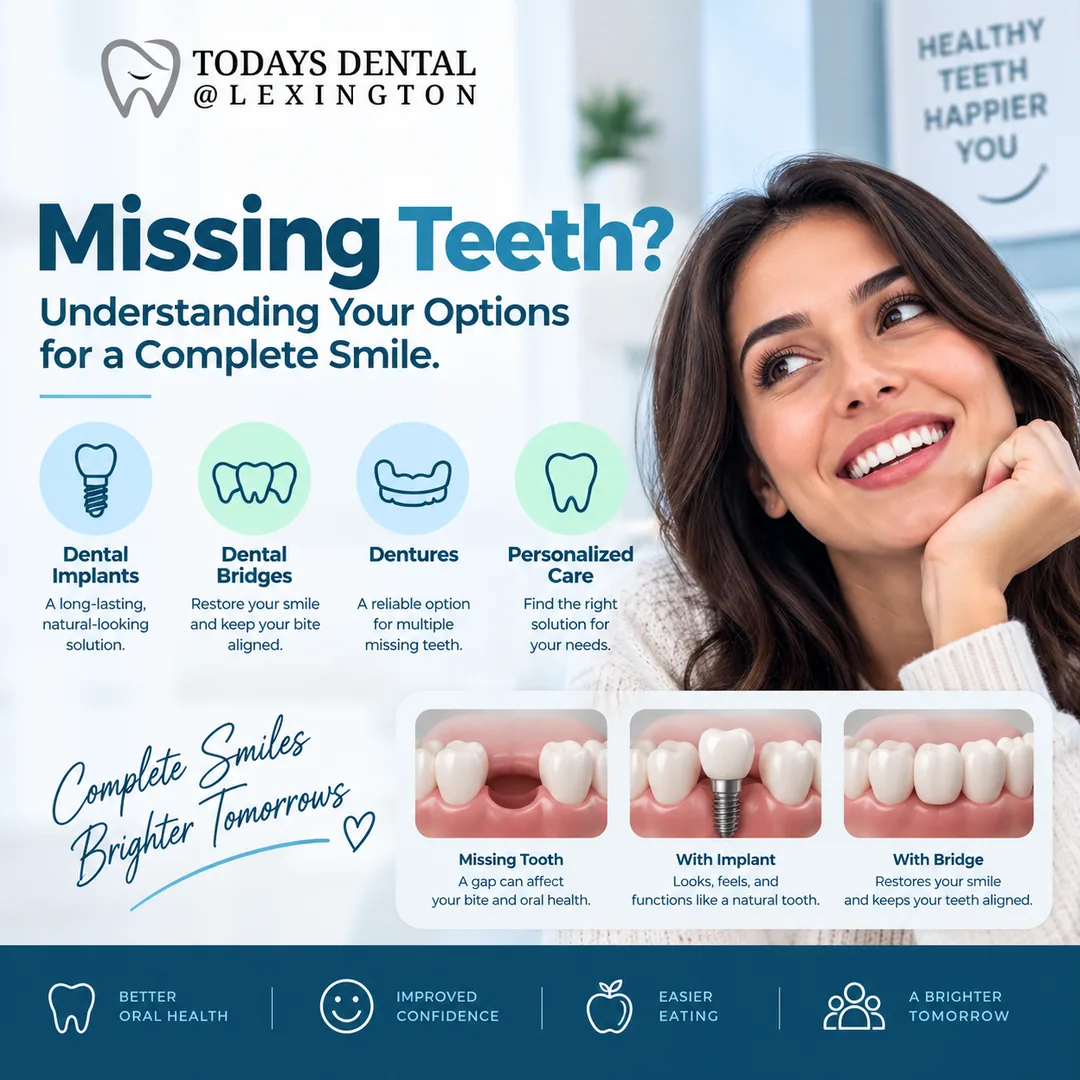
Missing teeth can make it hard to eat, speak, and smile with confidence. Many people feel worried when teeth fall out or need removal. Missing teeth can also let nearby teeth shift and cause decay. This hurts oral health and the look of a smile.
One key fact is that dental implants can restore a tooth and protect the jawbone. Here you will know about dental implants, bridges, dentures, partial dentures, full dentures, and implant-supported options.
It will also show how to weigh jawbone health, comfort, appearance, cost, and care. This guide can help people find the best tooth replacement for their needs.
Tooth replacement options offer a way to restore smiles and boost confidence. Patients can explore various choices to find the best fit for their needs and lifestyle.
Dental implants offer a long-lasting solution for those with missing teeth. A single dental implant replaces one tooth, providing a strong and stable base. An implant-supported bridge can replace multiple missing teeth by securing the bridge to implants on either side. For those needing full-arch restoration, the All-on-4 system utilizes just four implants to support an entire set of dentures.
Missing molars may not show visually, but they impact chewing ability significantly. Each empty space encourages nearby teeth to shift into that gap. This shifting can cause decay in hard-to-clean areas and lead to bone loss around the missing tooth, which may later call for bone grafting. Dental implants help combat these issues while restoring both oral health and confidence in one’s smile.
Bridges serve as effective solutions for replacing missing teeth. Traditional bridges use crowns on neighboring teeth to hold the replacement tooth in place. They fit snugly and restore both function and aesthetics.
Implant-supported bridges offer a sturdy option by anchoring directly into the jawbone with implants. This method prevents shifting of nearby teeth, reducing potential decay in hard-to-clean areas.
For individuals missing a couple of adjacent teeth, dental bridges are often practical choices that blend seamlessly with the natural smile. Those who have experienced tooth loss may find these options enhance their ability to chew properly and speak clearly.
In one case, a woman regained her confidence after choosing a bridge for her missing front tooth; she loved how it looked and felt like her complete self again.
After discussing bridges, it’s essential to consider dentures. Dentures come in three main types: partial, full, and implant-supported. Partial dentures replace several missing teeth while preserving remaining ones. Full dentures cover the entire arch when all teeth are gone. Implant-supported dentures use dental implants for added stability.
Missing teeth can lead to challenges like shifting of surrounding teeth and bone loss around gaps. Partial dentures offer an effective solution when several teeth are absent. Complete tooth replacement with full dentures enables individuals to chew food properly, speak clearly, and smile confidently without hesitation. Dental professionals often recommend these options based on a person’s unique needs in restorative dentistry.
Choosing the right tooth replacement requires careful thought. Many factors influence this decision, including bone health and lifestyle choices.
Bone health plays a crucial role in tooth replacement options like dental implants and bridges. A person with strong jawbone density often qualifies for implants, enhancing their smile restoration journey.
If bone loss occurs around a missing tooth, it can limit available choices. Medical history significantly influences decisions too. Conditions such as diabetes or heart issues may require special consideration before opting for restorative dentistry.
Lifestyle factors also matter when evaluating the best solutions after losing teeth. For example, smokers generally face more complications than non-smokers during recovery from procedures like dental implants.
Active individuals might prefer options that allow them to chew properly and speak clearly without hesitation. First-hand experience shows that understanding one’s overall health helps tailor effective treatment plans for maintaining oral health and achieving a complete smile.
Comfort, appearance, and long-term benefits play a crucial role in choosing the right tooth replacement option. Dental implants offer stability and blend seamlessly with natural teeth. Patients enjoy improved comfort as they eat, speak, and smile confidently.
Bridges provide another viable solution for those missing one or two teeth. They improve appearance while allowing individuals to maintain normal chewing function. Partial dentures work well for several missing teeth too; they are easy to use but may require more maintenance over time.
Each option varies in terms of costs and upkeep. Evaluating these factors helps people find the best fit for their needs while ensuring oral health remains a priority. A cosmetic dentistry consultation can also help match the new teeth to the rest of the smile.
Costs for dental implants, bridges, and dentures vary significantly. Dental implants often require a larger upfront investment. Bridges and partial dentures usually cost less than full implants.
Patients should also think about their long-term needs. Maintenance plays a key role in these decisions as well. Implants can last many years with proper care, but they may require more visits to the dentist.
The timeline for each option differs too. While dental implants need several months to fuse with the jawbone, most bridges and dentures offer quicker options for smile restoration.
Partial dentures are ideal when several teeth are missing; they provide immediate support and comfort without lengthy procedures or recovery times. Choosing wisely involves balancing costs, timelines, and the level of ongoing maintenance required to keep oral health intact after tooth replacement.
Tooth replacement means swapping a missing tooth for a new one. Options include dental implants, bridges, and dentures. These choices protect oral health and the jawbone.
Dental implants are metal posts placed into the jawbone. They hold crowns or dental prosthetics. Implants support jawbone health and act like real teeth.
Bridges use crowns on nearby teeth to span a gap. Dentists use bridges to restore chewing and improve smile restoration. They fit when the jawbone and teeth around the gap are healthy.
Partial dentures replace some missing teeth. Full dentures replace all teeth in an arch. Both are removable dental prosthetics that help with eating and speech.
Restorative dentistry fixes function and oral health. Cosmetic dentistry and aesthetic dentistry focus on how your smile looks. Both can play a role in smile restoration.
Tell us a little about what you need — we'll be in touch shortly.
458 Old Cherokee Rd suite 100, Lexington, SC 29072, United States
Hi! I'm Tooth fairy! Your AI Assistant Ask me anything