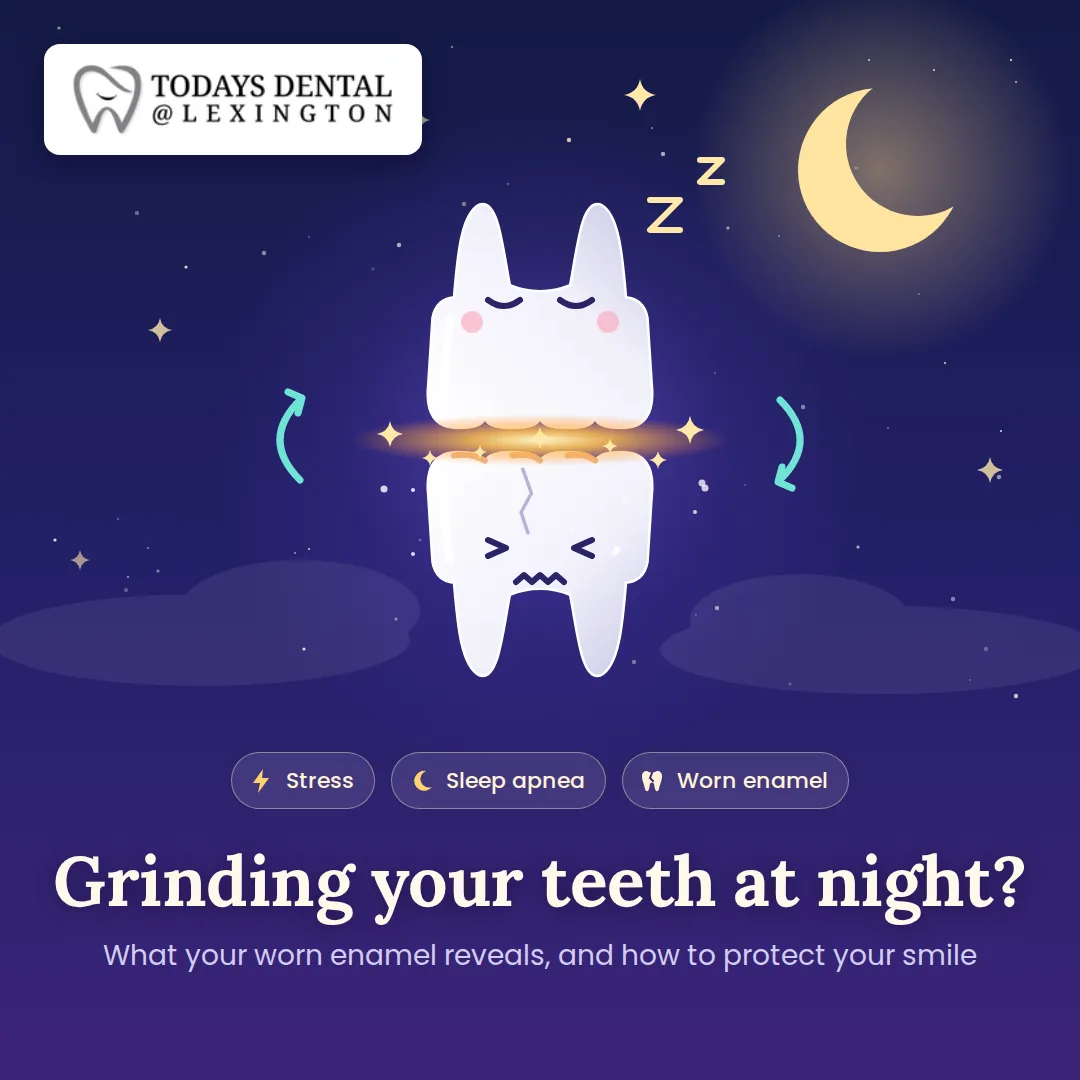
Many people wake with jaw soreness or headaches. They may notice worn enamel or flattened teeth. They may not know they have nighttime grinding, or bruxism. These signs can harm dental health and sleep quality.
Constant friction from nighttime teeth grinding wears away tooth enamel, the hard outer protective layer of teeth. Here you will know about common causes like stress, sleep apnea, anxiety, sleep disorders, and medication side effects.
Teeth grinding, known as bruxism, often stems from stress and anxiety. Many people unconsciously grind their teeth during sleep due to these triggers. Stress management techniques can help reduce this behavior.
Sleep apnea may also play a role in nighttime grinding; it can disrupt sleep patterns but does not cause the grinding itself.
Other conditions link to bruxism too. Acid reflux and certain medications can lead to clenching at night as well. Persistent jaw pain and tension headaches frequently accompany this issue.
Dental exams usually bring attention to tooth enamel erosion caused by constant friction during nighttime grinding. This damage includes chipped, cracked, or flattened teeth that might go unnoticed until discovered by professionals.
Jaw pain, tension headaches, and worn enamel often signal bruxism. This condition causes individuals to grind their teeth at night. Persistent clenching can lead to soreness in the jaw area.
Many people remain unaware of this behavior while they sleep. Signs of dental damage may include chipped or cracked teeth.
Worn enamel results from constant friction during grinding. This erosion exposes sensitive areas beneath the tooth surface, causing discomfort. People who grind their teeth may experience disrupted sleep patterns as well.
They might feel fatigue and anxiety due to a lack of quality sleep. A dental examination is crucial for assessing any hidden signs of wear that impact oral health and overall well-being.
Managing nighttime teeth grinding, or bruxism, involves various treatment options and stress reduction strategies. Dentists often recommend a mouthguard to protect the teeth from clenching and grinding during sleep. This device can prevent enamel erosion and reduce dental damage like chipped or cracked teeth.
Stress management plays a key role in addressing bruxism. Techniques such as meditation, yoga, and deep breathing exercises help lower anxiety levels. These methods not only improve sleep quality but also relieve jaw pain caused by persistent grinding. Individuals may also explore lifestyle changes to enhance overall oral health and well-being.
Bruxism often starts from stress or anxiety. Sleep disorders like sleep apnea and snoring can also cause grinding. Some people clench the jaw from a bad bite or medicines.
You may see enamel erosion and thin tooth enamel. You may have rough or flat teeth, tooth sensitivity, jaw soreness, jaw pain, or headaches. A partner may hear grinding at night.
Sleep apnea breaks sleep and lowers sleep quality. The body may react with jaw clenching or grinding. Treating apnea can cut episodes of nighttime grinding.
Yes. Stress management can cut clenching and grinding. Better sleep habits can raise sleep quality and lower anxiety.
Dentists can fit mouth guards or night guards for nighttime grinding. They can repair worn teeth and guide dental health and oral hygiene. They may also refer you for a sleep study.
See a dentist if you have tooth enamel damage, jaw pain, or headaches. See a sleep doctor if you snore, wake gasping, or have poor sleep. Early care protects your oral health.
Tell us a little about what you need — we'll be in touch shortly.
458 Old Cherokee Rd suite 100, Lexington, SC 29072, United States
Hi! I'm Tooth fairy! Your AI Assistant Ask me anything