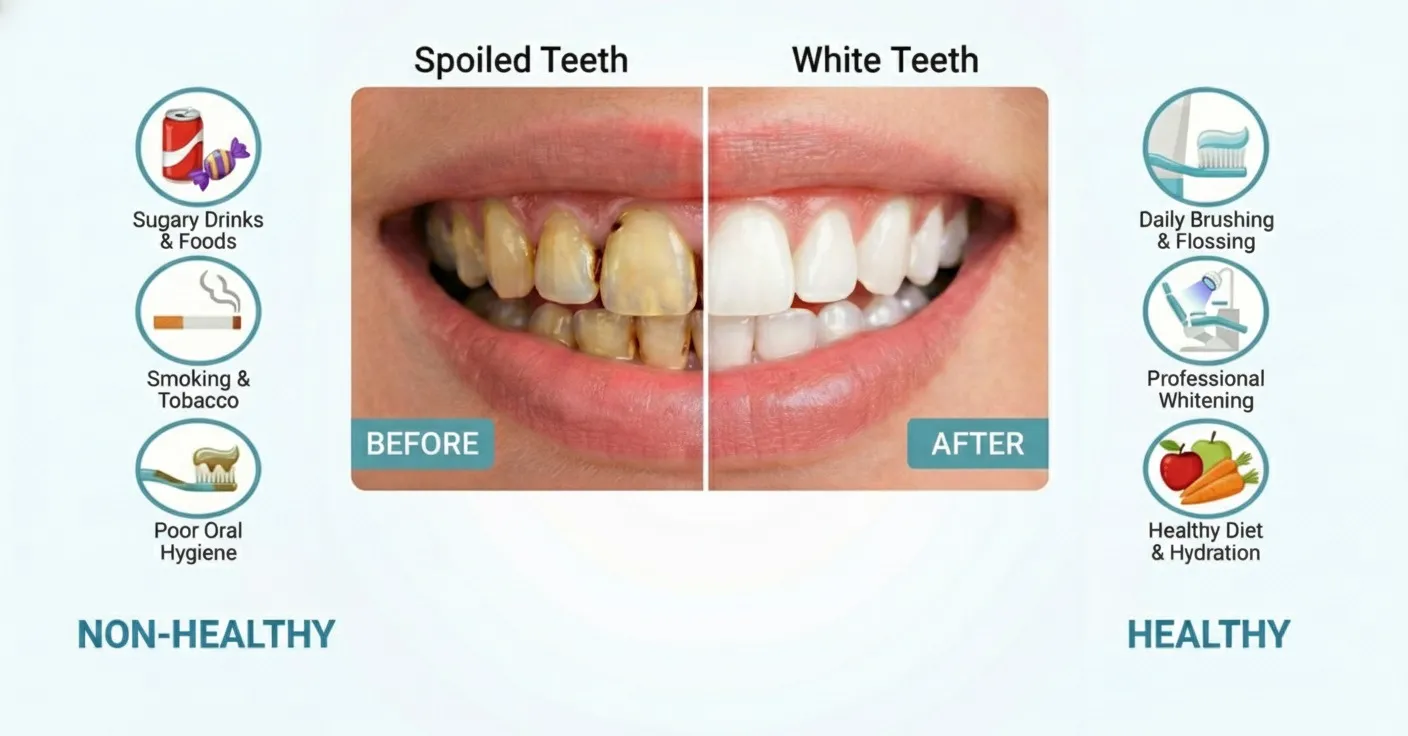
Your smile is often the first thing people notice — but everyday foods and drinks can slowly dull its brightness. At Todays Dental Lexington, we frequently meet patients who brush regularly yet still struggle with yellow or stained teeth. The truth is, some common items in your diet may be the hidden cause.
Coffee is one of the biggest culprits. Its dark pigments and acidity allow stains to cling to enamel over time.
Prevention Tip: Rinse your mouth with water after drinking or use a straw when possible.
Black tea, green tea, and herbal teas can all cause staining due to tannins — compounds that stick to tooth surfaces.
Prevention Tip: Limit prolonged sipping and brush 30 minutes after consumption.
Red wine contains both chromogens and tannins, a combination that makes staining more likely.
Prevention Tip: Drink water alongside wine and avoid letting it linger in your mouth.
Blueberries, blackberries, cherries, and pomegranates have intense pigments that can temporarily darken teeth.
Prevention Tip: Pair them with crunchy fruits like apples or carrots to naturally scrub enamel.
Pasta sauces and curries often contain acidic tomatoes that weaken enamel, making it easier for color to stick.
Prevention Tip: Add leafy greens or cheese to meals to help neutralize acids.
Professional cleaning removes deep stains that regular brushing simply cannot reach.
If discoloration doesn’t improve despite good hygiene, it may be time for expert care. Our team offers professional teeth whitening in Lexington, SC — safe, effective, and tailored to your smile.
Call (803) 756-4353 today to book your teeth cleaning or whitening consultation.
Most staining foods don’t need to be eliminated — they just need smarter habits and regular professional care. A bright smile is less about restriction and more about maintenance.
Coffee, black tea, red wine, cola, and dark berries are the most common culprits, along with tomato based sauces, soy sauce, curry, and balsamic vinegar. These items combine deep pigments with acids that briefly roughen enamel, letting colour settle in. Smoking and tobacco use compound the problem and produce some of the most stubborn discolouration.
Rinse with plain water right after eating or drinking something deeply coloured, which clears pigment before it settles. Drinking through a straw keeps liquid off the front teeth, and pairing staining drinks with a meal reduces contact time. Brushing twice daily with fluoride toothpaste and keeping regular cleanings removes the surface film that traps colour.
Wait roughly thirty minutes before brushing. Coffee, wine, and citrus are acidic, and they temporarily soften enamel, so brushing immediately can scrub away that softened surface layer. Rinsing with water in the meantime helps clear both acid and pigment, and saliva rehardens the enamel so that brushing afterward is safe and more effective.
Often yes, depending on what caused the discolouration. Surface stains from food, drink, and tobacco frequently respond to a professional cleaning or a whitening treatment. Stains that come from within the tooth, such as those caused by injury, certain medications, or ageing dentine, behave differently and may need a restorative option instead.
Whitening toothpastes work mainly by polishing away surface stains with mild abrasives, so they can brighten teeth slightly over several weeks. They do not change the natural underlying shade of the tooth the way a peroxide based treatment does. Choosing a product that is not overly abrasive protects enamel and exposed root surfaces from wear.
Tell us a little about what you need — we'll be in touch shortly.
458 Old Cherokee Rd suite 100, Lexington, SC 29072, United States

Hi! I'm Tooth fairy! Your AI Assistant Ask me anything