Many people need tooth replacement after an injury or decay. They feel unsure about choosing dental implants or dental bridges. Patients worry about cost, oral surgery, and how long the new tooth will last.
One fact helps clarify a lot. Dental implants fuse to the jawbone, which helps stop bone loss. Here you can compare options, bone grafting needs, restorative dentistry steps, and periodontal health effects.
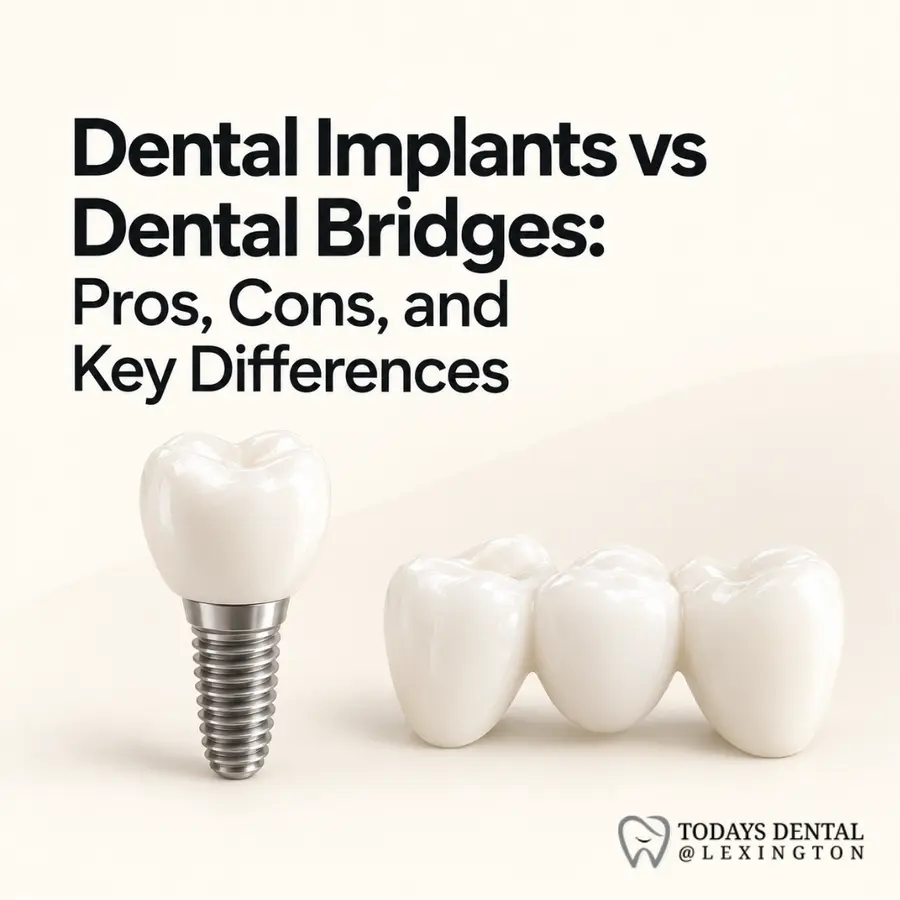
Dental implants and dental bridges serve as popular tooth replacement options. Implants consist of metal posts inserted into the jawbone. These posts act like artificial tooth roots, providing a strong foundation for crowns. Dental bridges, on the other hand, use adjacent teeth for support. They fill gaps by anchoring false teeth between healthy ones.
The key differences lie in their structure and function. Implants require oral surgery and may involve bone grafting to enhance jawbone stability. Bridges do not need such procedures but depend on existing teeth for support.
Both options offer aesthetic benefits, yet implants often last longer than bridges with proper maintenance. Each choice has unique pros and cons that can impact dental health decisions down the line.
Dental implants offer many benefits. They provide a strong foundation for prosthesis replacement. This option can last a lifetime with proper care, making it a great choice for tooth replacement.
The process usually involves oral surgery and sometimes bone grafting to support the implant in the jawbone. Patients appreciate the natural aesthetics that implants provide since they closely resemble real teeth.
On the other hand, dental bridges are often less expensive and require less recovery time compared to implants. However, they rely on adjacent teeth for support, which may affect their longevity and maintenance over time.
Bridges also lack some of the benefits related to maintaining jawbone health that come with implants. Each choice presents unique pros and cons worth considering before deciding on treatment options. Understanding these differences helps one choose wisely between dental implants and bridges.
Choosing between dental implants and dental bridges requires careful thought. Each option carries unique benefits and challenges. Dental implants provide long-term solutions for tooth replacement, promoting better oral health by stimulating the jawbone. They often last longer than bridges if properly maintained.
On the other hand, dental bridges offer a quicker fix without surgery. They can restore aesthetics quickly but might need replacements sooner than implants do. Patients should weigh factors like cost, longevity, and maintenance when making a decision that suits their needs in restorative dentistry. Consulting a dentist helps clarify concerns related to bone grafting or periodontal health as well.
Dental implants replace the tooth root with a metal post in the jawbone. A bridge uses a prosthesis, a replacement tooth, held by nearby teeth. Implants need oral surgery and may need bone grafting. Bridges need less surgery but change healthy teeth.
Implants usually last longer and give better aesthetics. They fuse to the jawbone and support dental restoration that looks natural. Bridges can look good, but they may wear out sooner. Cost can be higher for implants.
Implants help keep the jawbone strong and support dental health. Good oral hygiene prevents problems. Bridges can raise risks to adjacent teeth and periodontal health if you do not clean well. Both need regular care.
Both need routine maintenance and good oral hygiene. Implants need checkups to ensure the implant and bone stay healthy. Insurance coverage varies by plan. Cost depends on the type of procedure, materials, and dental restoration needed.
People who choose implants often need oral surgery. If the jawbone is weak, surgeons may do bone grafting first. Bridges usually do not need bone grafting. Talk to an oral surgeon or implantology specialist about your jawbone and options.
Dentists check dental health, periodontal health, and the state of the jawbone. They weigh aesthetics, longevity, cost, and maintenance. They review your insurance coverage and overall oral hygiene. The dental specialty team will plan the best tooth replacement for you.
Tell us a little about what you need — we'll be in touch shortly.
458 Old Cherokee Rd suite 100, Lexington, SC 29072, United States
Hi! I'm Tooth fairy! Your AI Assistant Ask me anything