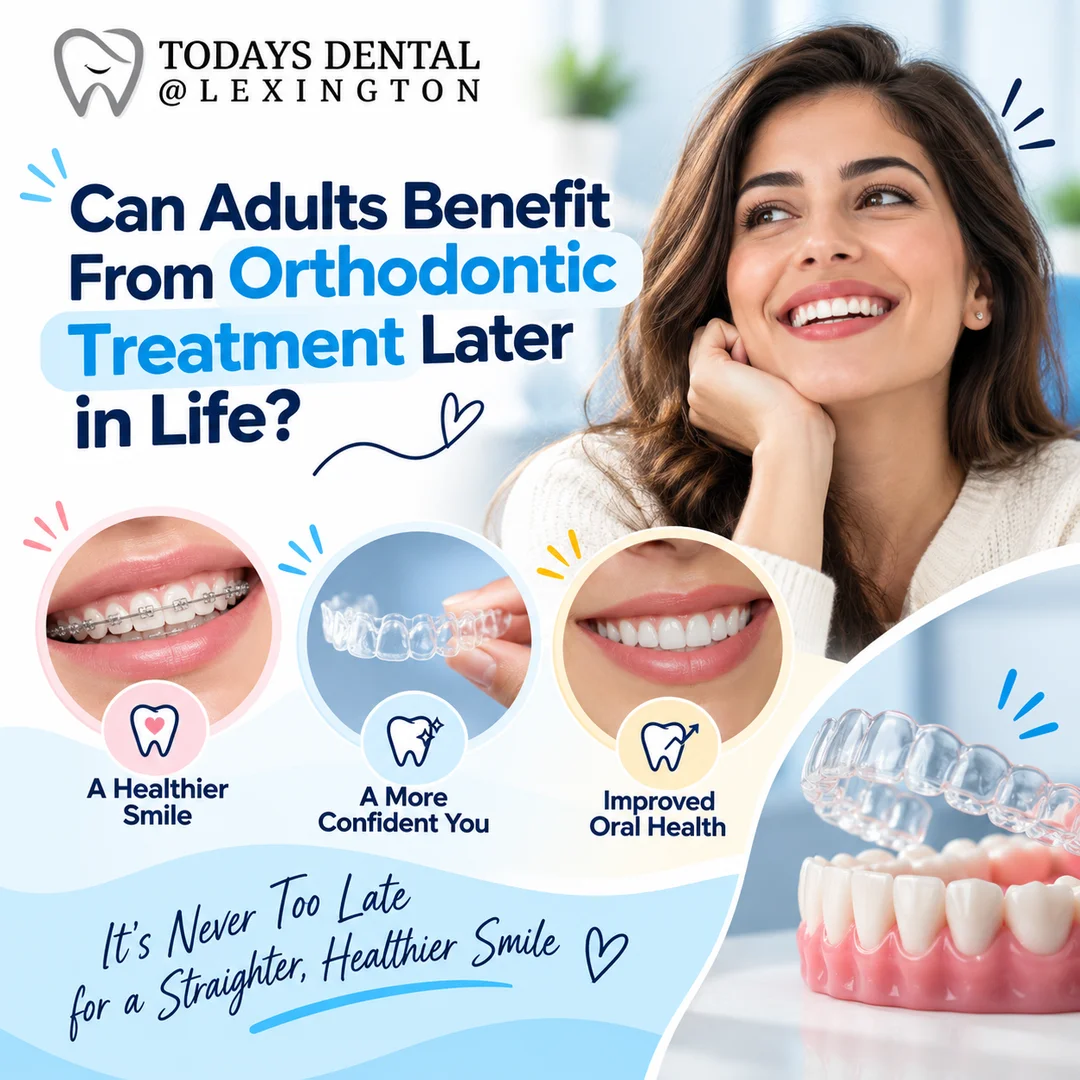
Many adults live with crooked teeth, bite pain, or a smile they hide. They worry it might be too late for braces. They ask if treatment will help health as well as looks. These worries feel real and frustrating.
One fact stands out, orthodontic care can help most adults. Teeth move at any age, though treatment may take a bit longer. Here you will know the main benefits, common treatment choices, and concerns.
Adults can gain a lot from orthodontic treatment. Straightening their teeth brings multiple advantages, like improved dental health and a boost in confidence.
Straight teeth help oral health. Cleaning gets easier around aligned teeth. Braces and clear aligners move teeth into better positions. Gum disease and cavities drop when plaque clears more often.
Proper alignment aids bite and jaw function. Chewing evens out pressure on teeth. Flossing and brushing reach more surfaces. Patients often use retainers after orthodontic treatment to keep results.
Adults often smile more after orthodontic treatment. A straighter smile lifts confidence fast. People who get braces or clear aligners report better social comfort. Better teeth alignment also helps dental health and daily oral hygiene.
Many adults find job talks and dates easier with a new smile. One patient joked that the mirror finally gave back a high five. Orthodontics can change how a person speaks, laughs, and feels.
Next, Treatment Options Available for Adults will cover clear aligners, ceramic braces, and traditional metal braces.
Correcting jaw alignment improves bite function and eases chewing. A clinician recalls treating a 48-year-old patient whose chronic jaw pain eased after braces and a retainer.
Better alignment reduces uneven tooth wear and lowers the risk of gum disease. Many adult patients report clearer speech and less TMJ strain after orthodontic treatment.
Adults have a variety of options for orthodontic treatment. Clear aligners offer a discreet choice while ceramic braces blend in with teeth. Traditional metal braces remain effective and reliable too. Each option caters to different needs, making it easier for adults to find the right fit.
Clear aligners fit modern adult lives.
| Topic | Quick Points |
|---|---|
| What they are | Clear, plastic trays that shift teeth. Wear them most of the day. Change sets every one to two weeks. |
| Who is a good fit | People with mild to moderate crowding or spacing. Busy professionals and parents. Those who prefer a low-profile option. |
| Treatment steps | Initial exam and scans. Digital plan shows tooth movement. The patient receives a series of aligners. Routine check-ins with a provider. |
| Timeframe | Many cases finish in 6 to 18 months. Complex bites may take longer. Compliance shortens the timeline. |
| Cost range | Typical costs run from $3,000 to $8,000. Insurance may cover part. Financing options are common. |
| Daily life | Trays are removable for meals. Oral hygiene stays easier than with wires. Speech may need a short adjustment period. |
| Comfort and pain | Mild soreness occurs after each new set. Most find them gentler than braces. Soft wax is not usually needed. |
| Maintenance | Clean with gentle brush and lukewarm water. Avoid hot water that warps plastic. Store in a case when not worn. |
| Pros | Low visibility. Fewer office visits for many brands. Predictable digital planning. |
| Cons | Need strict wear time, typically 20 to 22 hours daily. Not ideal for very complex tooth moves. Replacement trays add cost if lost. |
| Common myths | Myth: Clear aligners only work for simple cases. Fact: Many moderate cases respond well. Myth: Treatment never needs attachments. Fact: Small tooth bumps may help certain movements. |
| Real-world tip | Pack a case and a travel brush. A quick rinse keeps trays fresh. Compliance beats fancy features. |
Ceramic braces offer a less visible way to straighten teeth.
| Topic | Summary Points |
|---|---|
| What they are |
|
| Appearance |
|
| Comfort |
|
| Effectiveness |
|
| Maintenance |
|
| Cost |
|
| Treatment time |
|
| Who benefits |
|
| Drawbacks |
|
| Comparison |
|
| Anecdote |
|
Next, common concerns get addressed.
After comparing ceramic options, metal braces remain a strong choice for many adults.
Adults often worry about starting orthodontic treatment. They might wonder if it’s worth the effort at their age. Below are common concerns and clarifications about adult orthodontics.
Absolutely! Adults can achieve straighter teeth and improved smiles through orthodontic treatment. It's never too late to invest in your dental health.
Many adults want to fix crooked teeth, gaps, or bite issues. Some seek orthodontics for better oral hygiene; others just want a confident smile.
Yes, it is safe for older patients. Orthodontists evaluate each person's health before starting treatment. They create a tailored plan that suits individual needs.
Treatment time varies but typically lasts 12 to 24 months. Factors include the complexity of the case and type of braces chosen; patience pays off with stunning results!
Tell us a little about what you need — we'll be in touch shortly.
458 Old Cherokee Rd suite 100, Lexington, SC 29072, United States

Hi! I'm Tooth fairy! Your AI Assistant Ask me anything